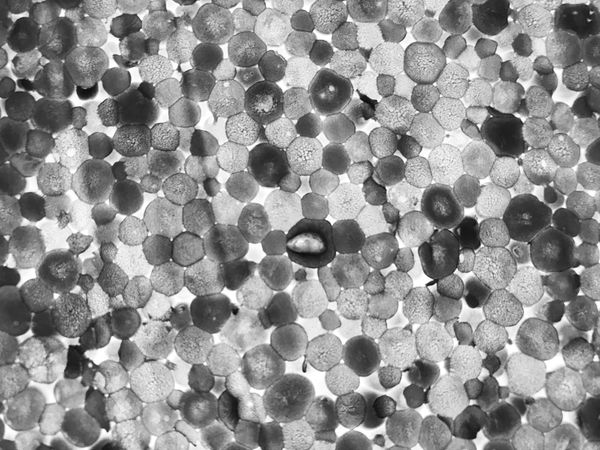
A1C: The Three-Month Report Card Your Doctor Watches Closely
Because red blood cells live for roughly 90–120 days, your A1C gives your doctor a rolling average of your blood sugar levels over the past two to three months. No single meal, no lucky morning, no last-minute cleanup before a blood draw can fake it.

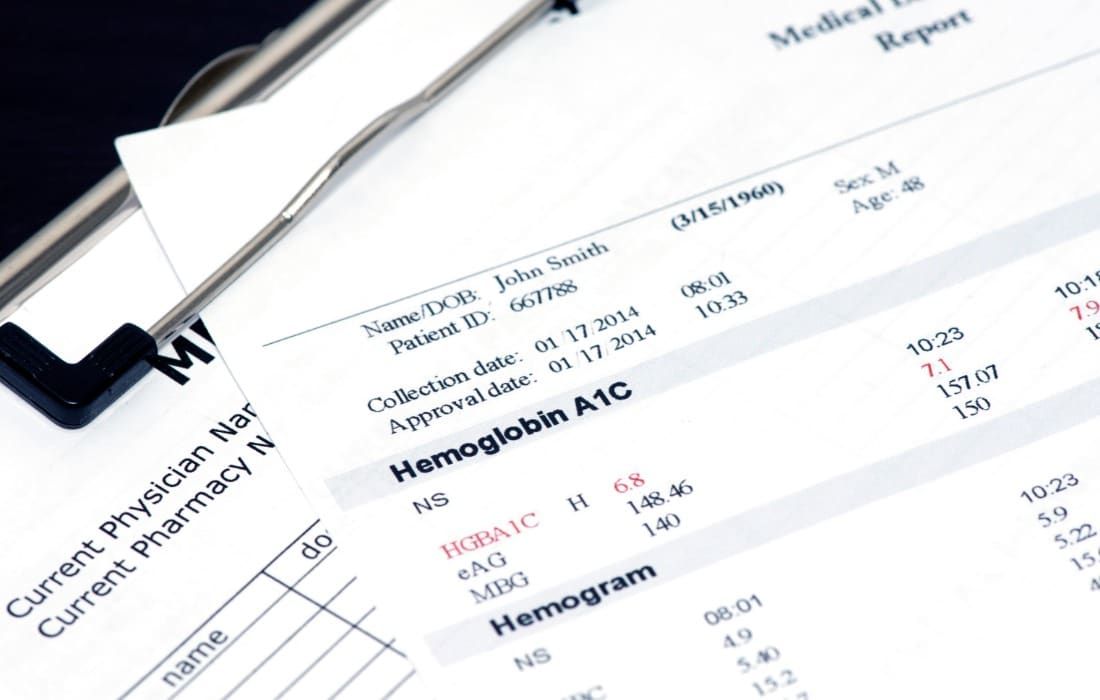
One number that reveals how your blood sugar has really been behaving — not just on the day of your test.
What Is It?
If fasting glucose is a snapshot, the A1C is the full film reel.
Hemoglobin A1C — commonly written as HbA1c or just A1C — measures the percentage of hemoglobin in your red blood cells that has glucose attached to it. Because red blood cells live for roughly 90–120 days, your A1C gives your doctor a rolling average of your blood sugar levels over the past two to three months. No single meal, no lucky morning, no last-minute cleanup before a blood draw can fake it.¹
Here's how it works: when glucose circulates in your blood, some of it binds irreversibly to hemoglobin — the oxygen-carrying protein inside your red blood cells. The more glucose in your blood over time, the more hemoglobin gets coated. The A1C test measures that percentage. A result of 6.5% means that 6.5% of your hemoglobin is glycated (sugar-coated).
This test was developed in the 1970s and has become the gold standard for diagnosing and monitoring diabetes and prediabetes. It requires no fasting and can be run as part of a routine blood draw.²
Here's what makes A1C so important at the national level: the American Diabetes Association estimates that 38 million Americans have diabetes, and another 98 million have prediabetes. That's more than 40% of the entire country sitting somewhere on the blood sugar dysfunction spectrum.³ Many of them have no idea because they've never had this test — or they got the result and didn't understand what it meant.
That ends today.
What's the Healthy Range?
A1C is reported as a percentage. Here's how to read it:
A1C Reference Ranges:
- Normal: Below 5.7%
- Prediabetes: 5.7% – 6.4%
- Diabetes: 6.5% or above (confirmed on two separate tests)
- Well-controlled diabetes target: Below 7.0% (per ADA guidelines for most adults)
To give that percentage some real-world context, there's a formula that converts A1C to an estimated average glucose (eAG) in mg/dL. An A1C of 5.7% corresponds to an average blood glucose of about 117 mg/dL. An A1C of 7.0% corresponds to roughly 154 mg/dL average. At 9.0%, you're looking at an average of 212 mg/dL — the kind of chronic elevation that causes serious organ damage over time.⁴
Some functional and integrative medicine practitioners consider optimal A1C to be in the range of 4.8%–5.4% — meaningfully below the conventional "normal" cutoff. The logic: why wait until you're approaching the danger zone before paying attention?
One important caveat: A1C can be artificially skewed by certain conditions. Anything that affects red blood cell lifespan — iron deficiency anemia, sickle cell trait, recent blood transfusions, kidney disease — can make A1C higher or lower than your actual average glucose. If your A1C and fasting glucose tell different stories, bring that up with your doctor.⁵
What Can You Do About It?
Because A1C reflects a 90-day average, improving it requires consistency — not just a week of clean eating before your next appointment. The good news is that lifestyle changes can move A1C meaningfully within 3–6 months for most people.
If Your A1C Is Too High:
Dietary strategies:
- Reduce refined carbohydrates and added sugars aggressively — these are the primary drivers of chronically elevated blood glucose
- Prioritize protein and healthy fat at every meal to slow glucose absorption
- Increase dietary fiber: vegetables, legumes, and whole grains buffer glucose spikes
- Consider a lower-carbohydrate approach: even modest carb reduction (under 130g/day) has shown significant A1C improvements in clinical trials⁶'
- Eat in a consistent window — irregular eating patterns disrupt insulin response
- Watch portion sizes, especially for starchy foods like rice, bread, pasta, and potatoes
Movement and exercise:
- Resistance training is one of the most powerful tools for improving insulin sensitivity and lowering A1C — aim for 2–4 sessions per week
- Daily walking, especially after meals, reduces post-meal glucose spikes that accumulate over time
- HIIT (High-Intensity Interval Training) has shown A1C reductions comparable to longer moderate-intensity exercise in less time⁷
- Simply reducing sedentary time — breaking up long periods of sitting — has a measurable effect on glucose metabolism
Supplements with research support:
- Berberine: One of the most well-studied supplements for blood glucose — shown in multiple trials to reduce A1C by 0.5%–1.5% in people with type 2 diabetes⁸
- Magnesium glycinate or citrate: Low magnesium is strongly correlated with insulin resistance and elevated A1C
- Cinnamon (Ceylon): Some trials show modest A1C reduction; evidence is mixed but generally safe to add
- Inositol (specifically myo-inositol): Emerging evidence for improving insulin signaling, particularly in women with PCOS
- Chromium picolinate: May improve insulin receptor sensitivity at 200–1000mcg/day
Sleep and stress — the underrated levers:
- Chronic sleep deprivation elevates cortisol, which raises blood glucose and contributes to insulin resistance — 7–9 hours is non-negotiable
- Chronic psychological stress has a direct biochemical effect on blood sugar; managing it isn't soft — it's metabolic medicine
- Alcohol disrupts liver glucose regulation and contributes to glycemic instability — minimize it
If Your A1C Is Too Low:
An A1C below 4.5% is rare in the general population and warrants investigation. It can indicate conditions that shorten red blood cell lifespan (such as hemolytic anemia), rather than truly exceptional metabolic health. Hypoglycemia-prone individuals managing diabetes with aggressive medication regimens may also see artificially low readings. Always discuss unusually low values with your physician.
The Science Right Now
The research around A1C has evolved significantly — and some of the most interesting work is challenging how we've traditionally interpreted it.
A 2022 study in JAMA Internal Medicine found that A1C targets for older adults with type 2 diabetes may be set too aggressively — that pushing A1C below 7% in elderly patients with other health conditions increased risk of dangerous hypoglycemic episodes without meaningful benefit in outcomes.⁹ The takeaway: A1C targets should be personalized, not one-size-fits-all.
On the reversal front, a landmark UK trial called DiRECT (Diabetes Remission Clinical Trial) demonstrated that an intensive dietary intervention — specifically a low-calorie, whole-food-based diet — could achieve full diabetes remission (A1C below 6.5% without medication) in nearly half of participants at one year, and sustained remission in a meaningful percentage at two years.¹⁰ That's not management. That's reversal.
Researchers at the Salk Institute have also identified a biological mechanism by which time-restricted eating (eating within an 8–10 hour window daily) improves insulin sensitivity and lowers A1C independent of caloric intake — suggesting that when you eat matters alongside what you eat.¹¹
For a deep dive into the science of metabolic health and A1C, Dr. Robert Lustig's work on fructose metabolism and Dr. Jessie Inchauspé's (the "Glucose Goddess") research on glucose curve management are excellent accessible resources. Inchauspé's book Glucose Revolution is a practical, science-backed guide to flattening glucose spikes — which directly drives A1C down over time.
"You cannot manage what you do not measure. The A1C is one of the most important numbers in your health profile — and one of the most fixable." — Dr. Mark Hyman
The Bottom Line
Your A1C doesn't lie. It can't be charmed, gamed, or sweetened. It's a three-month verdict on the choices you've been making — quietly written in your own blood cells.
But here's the thing about verdicts: they can change. People reverse prediabetes. People bring A1Cs down from diabetic range to normal range through food, movement, sleep, and consistency. It happens all the time. The research is unambiguous on this.
You just have to decide it matters enough to start. That's the hardest part — and the most important one.
Know your number. Own your choices. Commit.
Sources & Endnotes
1. Nathan, D.M., et al. "Translating the A1C assay into estimated average glucose values." Diabetes Care, 2008. https://doi.org/10.2337/dc08-0545
2. Goldstein, D.E., et al. "Tests of glycemia in diabetes." Diabetes Care, 2004. https://doi.org/10.2337/diacare.27.7.1761
3. Centers for Disease Control and Prevention. "National Diabetes Statistics Report." CDC.gov, 2024. https://www.cdc.gov/diabetes/data
4. American Diabetes Association. "A1C and eAG conversion chart." Diabetes Care, 2024. https://diabetesjournals.org/care
5. Gallagher, E.J., et al. "Biological variation in HbA1c predicts risk of retinopathy and nephropathy in type 1 diabetes." Diabetes Care, 2019.
6. Saslow, L.R., et al. "Outcomes of a Digitally Delivered Low-Carbohydrate Type 2 Diabetes Self-Management Program." JMIR Diabetes, 2018. https://doi.org/10.2196/10723
7. Jelleyman, C., et al. "The effects of high-intensity interval training on glucose regulation and insulin resistance: a meta-analysis." Obesity Reviews, 2015. https://doi.org/10.1111/obr.12317
8. Yin, J., et al. "Efficacy of berberine in patients with type 2 diabetes mellitus." Metabolism, 2008. https://doi.org/10.1016/j.metabol.2008.01.011
9. Lipska, K.J., et al. "Individualized glycemic targets and A1C in older adults with type 2 diabetes." JAMA Internal Medicine, 2022.
10. Lean, M.E.J., et al. "Primary care-led weight management for remission of type 2 diabetes (DiRECT)." The Lancet, 2018. https://doi.org/10.1016/S0140-6736(17)33102-1
11. Lowe, D.A., et al. "Effects of Time-Restricted Eating on Weight Loss and Other Metabolic Parameters in Women and Men With Overweight and Obesity." JAMA Internal Medicine, 2020
© Commit250 | commit250.com | All articles in this series are for informational purposes only and do not constitute medical advice. Consult a qualified healthcare provider before making changes to your diet, supplements, or exercise routine.