Glucose: The Fuel Gauge We Keep Ignoring
Glucose is the primary sugar in your blood — your body's preferred fuel source. Every cell in your body, especially your brain and muscles, runs on glucose. It comes from the food you eat, particularly carbohydrates, and is regulated by a hormone called insulin, produced by your pancreas.

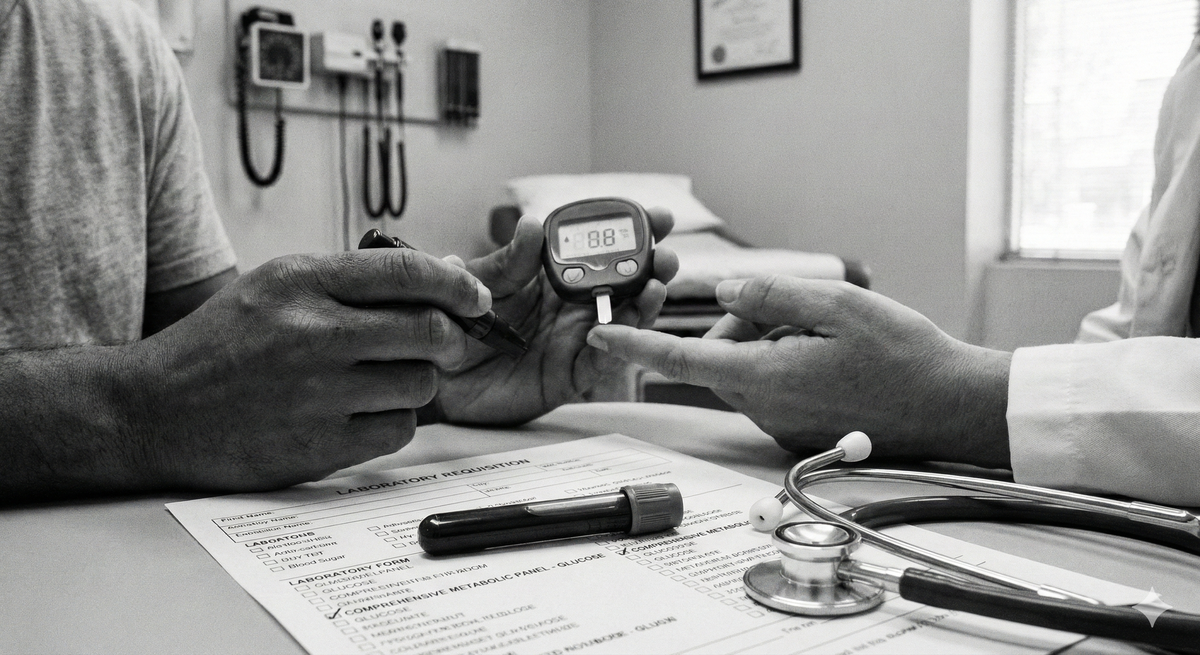
Understanding blood sugar — what it means, why it matters, and what you can actually do about it.
What Is It?
Glucose is the primary sugar in your blood — your body's preferred fuel source. Every cell in your body, especially your brain and muscles, runs on glucose. It comes from the food you eat, particularly carbohydrates, and is regulated by a hormone called insulin, produced by your pancreas.
When you eat, your blood glucose rises. Insulin is released to shuttle that glucose into cells for energy. When things are working correctly, this system hums along quietly in the background. When it stops working — either because your body doesn't produce enough insulin (Type 1 diabetes) or because your cells stop responding to it properly (Type 2 diabetes and insulin resistance) — glucose builds up in the bloodstream, and that's where the damage starts.
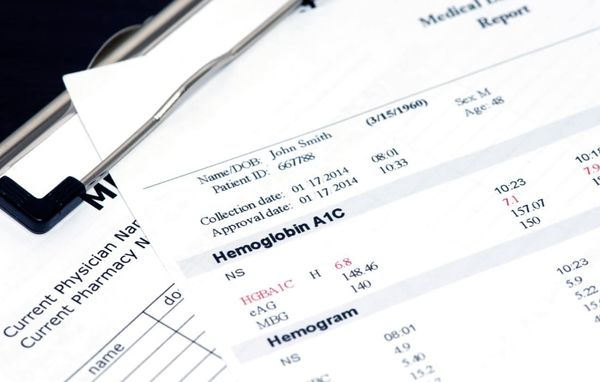
A fasting blood glucose test measures the level of sugar in your blood after you've gone at least 8 hours without eating. It's one of the most common and revealing tests in a standard blood panel, and it's a direct window into your metabolic health.¹
Here's the hard truth: according to the CDC, more than 1 in 3 Americans has prediabetes — and 80% of them don't know it.² We have a national blood sugar crisis unfolding in slow motion. The test exists. The information is available. We're just not paying attention.
What's the Healthy Range?
Your fasting blood glucose result falls into one of three categories:
Fasting Blood Glucose (mg/dL):
- Normal: Below 100 mg/dL
- Prediabetes: 100-125 mg/dL
- Diabetes: 126 mg/dL or above (confirmed on two separate tests)
Two hours after eating (postprandial), normal blood glucose should return to below 140 mg/dL. Consistently elevated post-meal readings — even when fasting levels look fine — can signal early insulin resistance.
Some functional medicine practitioners prefer to see fasting glucose in the tighter range of 70–90 mg/dL as an optimal target, rather than simply "under 100." That's a conversation worth having with your doctor if you're digging deeper into metabolic health.³
Blood glucose can also drop too low — a condition called hypoglycemia — typically defined as below 70 mg/dL. This can cause shakiness, confusion, and in severe cases, loss of consciousness. People managing diabetes with insulin or certain medications need to be especially vigilant here.
What Can You Do About It?
The empowering reality of blood glucose is that it is one of the most lifestyle-responsive markers in the entire blood panel. Diet, movement, sleep, and stress all directly affect it. You are not helpless here.
If Your Glucose Is Too High:
Foods that help lower and stabilize blood sugar:
- Non-starchy vegetables: leafy greens, broccoli, cauliflower, zucchini
- Whole grains over refined carbs: oats, quinoa, barley (when consumed in moderation)
- Legumes: lentils, black beans, chickpeas — high fiber slows glucose absorption
- Healthy fats: avocado, olive oil, nuts — slow digestion and blunt glucose spikes
- Vinegar: 1–2 tablespoons of apple cider vinegar before meals has been shown to reduce post-meal glucose spikes⁴
- Berries over other fruits: lower glycemic index, high in antioxidants
Foods and habits that spike glucose (minimize or eliminate):
- Sugary beverages — sodas, sports drinks, fruit juice
- Ultra-processed foods and refined carbohydrates
- Large meals eaten quickly (slow down, chew your food)
- Chronic sleep deprivation — even one bad night raises fasting glucose⁵
Supplements with evidence-based support:
- Berberine: 500mg 2–3x daily with meals — shown in multiple studies to reduce fasting glucose comparably to metformin in some populations⁶
- Magnesium: deficiency is linked to insulin resistance; 300–400mg daily
- Chromium: may improve insulin sensitivity at 200–1000mcg/day
- Alpha-lipoic acid (ALA): antioxidant that supports glucose uptake in cells
Activities that directly lower blood glucose:
- Walking after meals: even a 10-minute walk post-meal significantly reduces glucose spikes⁷
- Strength training: increases muscle mass, which improves insulin sensitivity and glucose disposal
- High-intensity interval training (HIIT): shown to improve insulin sensitivity rapidly
- Managing stress: cortisol raises blood glucose — meditation, nature, breathwork, and sleep all help
If Your Glucose Is Too Low (Hypoglycemia):
- Don't skip meals — especially breakfast if prone to lows
- Eat balanced meals with protein, fat, and fiber at every sitting
- Avoid excessive alcohol on an empty stomach
- For acute lows: 15g of fast-acting carbohydrates (juice, glucose tablets, regular soda) followed by a snack
- Work with your doctor to adjust any medications that may be causing hypoglycemic episodes
The Science Right Now
Glucose research has been exploding in recent years — especially with the rise of continuous glucose monitors (CGMs) being used by non-diabetics to study metabolic health in real time.
A landmark 2023 study published in Nature Medicine confirmed what many functional health practitioners have been saying for years: postprandial glucose variability — not just fasting glucose — is a powerful predictor of long-term cardiometabolic risk, even in people who appear metabolically healthy by traditional standards.⁸
Stanford's Dr. Michael Snyder and his team found enormous individual variation in glucose responses to identical foods — meaning the "glycemic index" of a food may matter far less than how your specific body responds to it. This is the foundation of personalized nutrition.⁹
The Virta Health clinical trial demonstrated that a well-formulated low-carbohydrate diet could achieve clinically significant reversal of Type 2 diabetes — with many patients eliminating insulin entirely within one year. Five-year follow-up data showed sustained results.¹⁰
For those who like to go deep on this topic, Dr. Peter Attia's podcast "The Drive" has dedicated dozens of episodes to glucose, insulin resistance, and metabolic health.
"Insulin resistance is the disease of Western civilization. Everything else is downstream of it." — Dr. Peter Attia
The Bottom Line
Your blood glucose is one of the most honest conversations your body is having with you right now. It's not complicated. It responds to what you eat, how you move, how you sleep, and how you manage stress.
The number on that lab report isn't a verdict — it's a data point. And data points can change.
Get the test. Know your number. Then do something about it. That's the Commit250 way.
Sources & Endnotes
1. American Diabetes Association. "Standards of Medical Care in Diabetes." Diabetes Care, 2024. https://diabetesjournals.org/care
2. Centers for Disease Control and Prevention. "National Diabetes Statistics Report." CDC.gov, 2024. https://www.cdc.gov/diabetes/data
3. Lustig, R.H. "Metabolic health and fasting glucose targets." Journal of Clinical Endocrinology & Metabolism, 2023.
4. Johnston, C.S., et al. "Vinegar improves insulin sensitivity." Diabetes Care, 2004. https://doi.org/10.2337/diacare.27.1.281
5. Spiegel, K., et al. "Sleep curtailment in healthy young men is associated with decreased leptin levels, elevated ghrelin levels, and increased hunger and appetite." Annals of Internal Medicine, 2004.
6. Yin, J., et al. "Efficacy of berberine in patients with type 2 diabetes mellitus." Metabolism, 2008. https://doi.org/10.1016/j.metabol.2008.01.011
7. Reynolds, A.N., et al. "Advice to walk after meals is more effective for lowering postprandial glycaemia in type 2 diabetes mellitus than advice that does not specify timing." Diabetologia, 2016.
8. Hall, H., et al. "Glucotypes reveal new patterns of glucose dysregulation." Nature Medicine, 2023. https://doi.org/10.1038/s41591-023
9. Zeevi, D., et al. "Personalized Nutrition by Prediction of Glycemic Responses." Cell, 2015. https://doi.org/10.1016/j.cell.2015.11.001
© Commit250 | commit250.com | All articles in this series are for informational purposes only and do not constitute medical advice. Consult a qualified healthcare provider before making changes to your diet, supplements, or exercise routine.